Abstract
I use four years of Monkeytype results to measure how I re-learned touch typing. I group the tests by duration so I don’t confuse learning progress with the higher scores from shorter tests.
In October 2022, I started using Monkeytype to re-learn touch typing. Progress was slow at first. Four years later, my scores are much higher.
One average cannot describe that change. Most early tests lasted 60 seconds, while recent tests are mostly 15-second sprints. I also completed far more tests during the first year. I use medians and compare tests of the same duration where possible.
Current level
| Metric | Value |
|---|---|
| Total tests | 416 |
| Period | 2022-10-15 to 2026-10-07 |
| Active days | 96 |
| Lifetime median WPM | 60.20 |
| Current 15s median WPM | 96.86 |
| Best WPM | 117.62 |
The lifetime median is 60.20 WPM. It includes the first sessions, when I was still learning where to place my fingers, so it no longer describes how I type. My latest 20 tests have a median of 96.86 WPM. My best result is 117.62 WPM.
Those recent tests last 15 seconds. Comparing them with my first 60-second tests would make the improvement look larger than it is.
| Window | n | WPM | Accuracy | Consistency |
|---|---|---|---|---|
| First 20 x 60s | 20 | 44.20 | 84.04% | 52.70 |
| Last 20 x 60s | 20 | 87.30 | 95.21% | 70.25 |
| Latest 20 x 15s | 20 | 96.86 | 96.68% | 73.75 |
The 60-second windows give me the fairest comparison. Median speed increased from 44.20 to 87.30 WPM. Accuracy rose from 84.04% to 95.21%, and consistency increased from 52.70 to 70.25. The 96.86 WPM result measures my current sprint speed, not my one-minute speed.
Progress
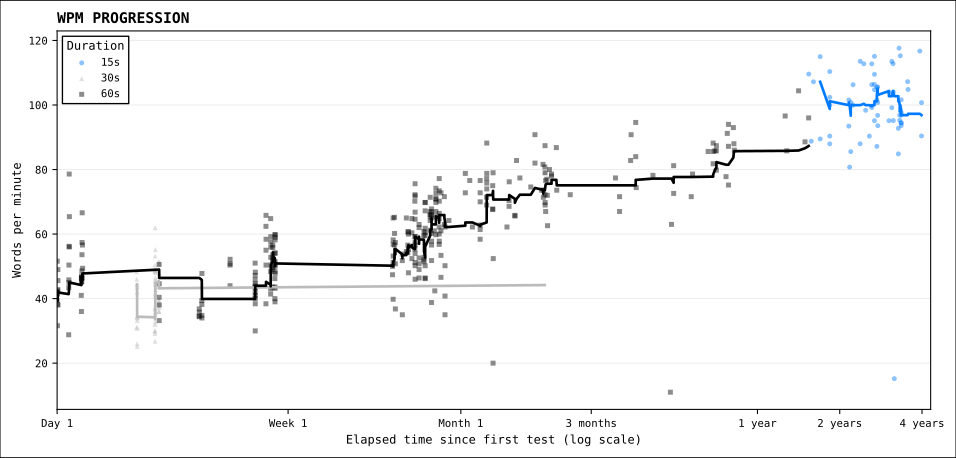
Each line is a 20-test rolling median for one test duration. The logarithmic time axis gives more space to the busy first months and less space to later gaps. The slow start remains visible, as do the recent scores between 90 and 115 WPM.
Practice
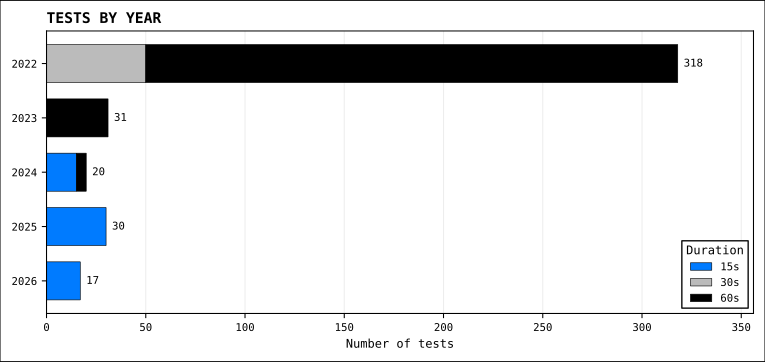
I completed 318 tests in 2022 and 98 from 2023 through 2026. This is why the lifetime median resembles my first year more than my current results. I also switched from 60-second tests to 15-second tests, so comparing yearly averages would be misleading.
Quality
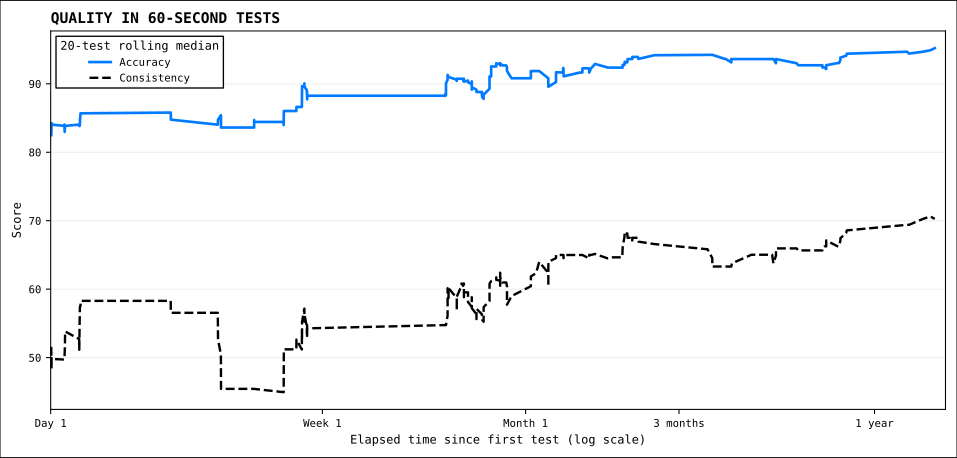
I did not get faster by sacrificing accuracy. During the 60-second tests, accuracy and consistency increased with WPM. I use only one duration in this figure so the change comes from practice, not from shorter tests.
Limits
The export contains 304 tests of 60 seconds, 50 tests of 30 seconds, and 62 tests of 15 seconds. I used each duration at a different stage, so the data cannot tell me how much test length alone affects WPM.
My current 15-second median is 96.86 WPM. The two comparable 60-second windows show that my sustained speed nearly doubled, but my last one-minute test is from April 2024. My next measurement should be a new block of 60-second tests.